Accessibility Overlays: Quick Fix or False Promise?
Date Published: Mar 02, 2026
Date Modified: Mar 02, 2026
Accessibility overlays promise something every business wants: instant WCAG compliance with a single line of code. No redesign. No developer effort. Just plug and play.
But are accessibility overlays truly a solution — or just a digital bandage covering deeper issues?
What Are Accessibility Overlays?
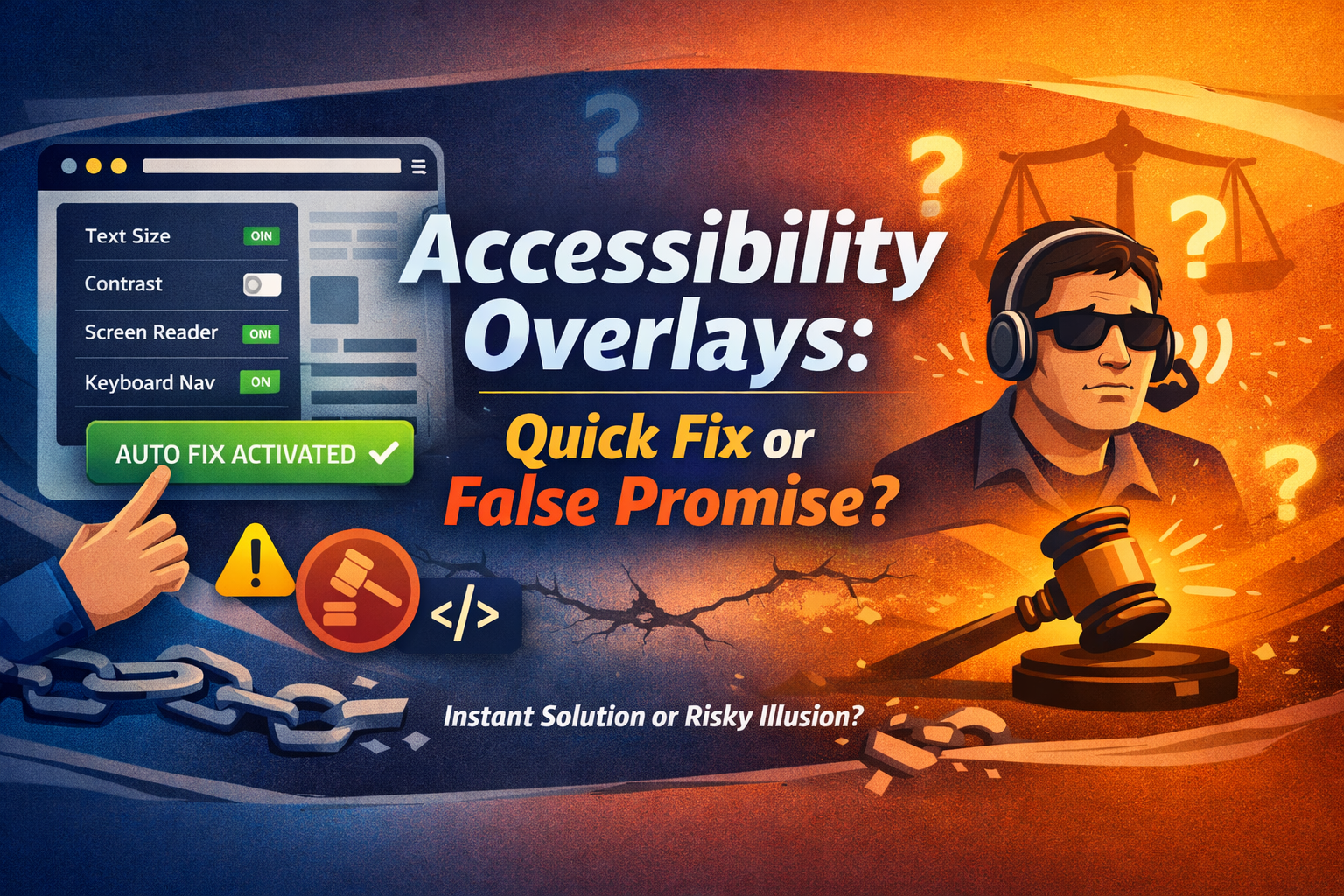
Accessibility overlays are third-party scripts that sit on top of your website. They typically provide a floating widget allowing users to adjust text size, contrast, spacing or enable screen reader enhancements.
The marketing promise is simple: automatic accessibility without touching your code.
Why Overlays Sound Appealing
- Fast implementation: Add a script and go live.
- Lower upfront cost: Cheaper than a full audit.
- Compliance claims: Vendors often advertise WCAG alignment.
For startups and enterprises under legal pressure, this can feel like a shortcut.
The Core Problem: They Don’t Fix Root Issues
-
Structural Code Errors Remain:
If your website lacks semantic HTML, proper labels, or logical heading hierarchy, an overlay cannot rewrite your backend structure.
-
Screen Reader Conflicts:
Many screen reader users rely on their own assistive technology settings. Overlays may override or interfere with those tools, creating confusion instead of clarity.
-
False Sense of Compliance:
A widget does not equal compliance. If accessibility barriers remain in forms, navigation or dynamic content, legal and reputational risks persist.
What Disability Advocates Say
Many accessibility professionals and disability communities argue that overlays shift responsibility away from proper inclusive design.
Accessibility should not depend on users fixing broken interfaces themselves. It should be built directly into the product experience.
The Legal Reality
Courts in multiple cases have clarified that installing an overlay does not automatically shield a business from accessibility lawsuits.
If barriers still exist, liability still exists.
A Sustainable Alternative
- Conduct a professional accessibility audit.
- Fix semantic structure and code-level issues.
- Test with real assistive technologies.
- Implement ongoing monitoring and training.
Accessibility is not a feature you add at the end. It is a quality standard embedded throughout design and development.
Conclusion
Accessibility overlays may look like a quick fix — but sustainable accessibility requires structural commitment.
True inclusion is not achieved through shortcuts. It is achieved through thoughtful design, clean code and respect for users.