ADA Title II vs WCAG Audit: Why They’re Not the Same
Date Published: May 01, 2026
Date Modified: May 01, 2026
When it comes to digital accessibility, one of the most common misconceptions is:
“We’ve done a WCAG audit, so we’re ADA compliant.”
It sounds logical — but it’s not accurate.
Understanding the difference between ADA Title II and a WCAG audit is critical, especially as accessibility regulations continue to become stricter.
What is ADA Title II?
ADA Title II is a part of the Americans with Disabilities Act that applies to state and local government entities.
It requires these organizations to provide equal access to all programs, services and activities — including digital platforms like websites and mobile applications.
Key expectations:
- Digital accessibility is not optional
- Websites and apps should align with WCAG 2.1 Level AA
- Accessibility must be ongoing, not a one-time fix
- Organizations need:
- Accessibility policies
- Staff training
- Grievance and feedback mechanisms
- Accountability systems
Enforcement is handled by the U.S. Department of Justice.
👉 In simple terms, ADA Title II is about legal compliance and protecting user rights.
What is a WCAG Audit?
WCAG is the global standard used to evaluate digital accessibility.
A WCAG audit is a structured assessment of your website or application against these guidelines.
It typically checks:
- Perceivable → Alt text, color contrast
- Operable → Keyboard navigation, focus states
- Understandable → Form labels, error handling
- Robust → Screen reader compatibility
Audits involve:
- Automated tools
- Manual testing
- Assistive technologies like NVDA or VoiceOver
👉 The result is a detailed report highlighting issues, severity and recommendations.
The Core Difference
Here’s where most confusion happens:
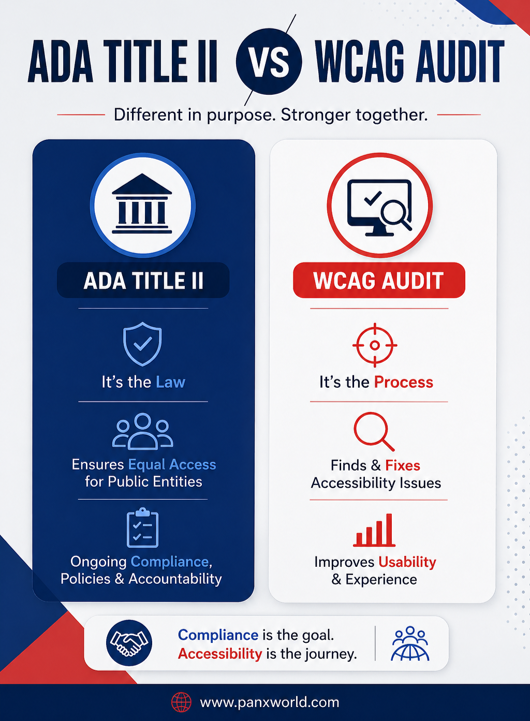
- ADA Title II = Law (what you must achieve)
- WCAG Audit = Process (how you evaluate and improve)
A WCAG audit helps you move toward compliance — but it does not guarantee it.
Why Passing an Audit Isn’t Enough
1. Continuous Accessibility
Accessibility isn’t a one-time project. Updates, new features and content changes can introduce new barriers.
2. Real User Experience
Compliance isn’t just about ticking boxes — it’s about ensuring people with disabilities can actually use your platform.
3. Organizational Commitment
Policies, training and internal processes matter just as much as technical fixes.
A Simple Way to Think About It
Think of it like this:
- ADA Title II = Traffic Law 🚦
- WCAG Audit = Vehicle Inspection 🔧
You need inspections to help — but following the law goes beyond just passing one.
What Should Organizations Do?
- Start with a WCAG audit
- Fix high-impact issues first
- Integrate accessibility into your development lifecycle
- Train your team
- Continuously monitor and improve
Final Thoughts
Accessibility is no longer just a “nice to have.” It’s a legal requirement, a user necessity and a business responsibility.
Understanding the difference between ADA Title II and WCAG audits helps you move from checking boxes to creating truly inclusive digital experiences.
If you're looking to improve your website accessibility or need a practical audit + fix approach, PanXWorld can help you get there — efficiently and effectively.